
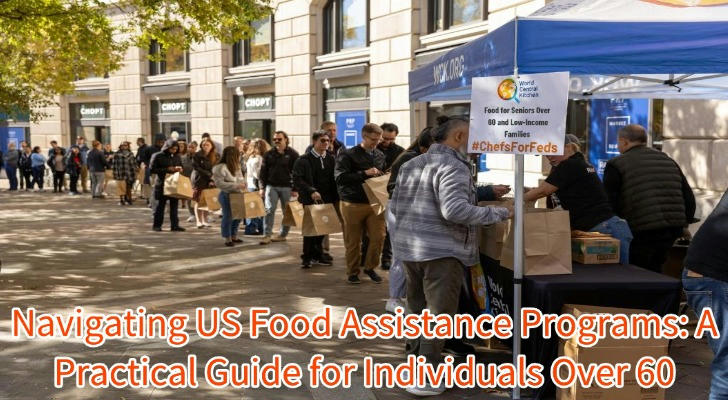
✨ Navigating US Food Assistance Programs: A Practical Guide for Individuals Over 60!
🔍Accessing healthy and sufficient food can be challenging for adults over 60 with limited income. Fortunately, the United States provides several food assistance programs designed specifically to support older adults and their families. This guide breaks down the main programs, eligibility requirements, and practical application steps to help secure the nutritious food essential for well-being.
📌 Understanding SNAP Benefits: How Food Stamps Support Older Adults
The Supplemental Nutrition Assistance Program (SNAP), commonly known as food stamps, is the largest federal program that helps low-income individuals purchase food. For adults over 60, SNAP can significantly reduce the financial burden of grocery shopping.
• How SNAP Works:
Benefits are loaded onto an electronic card that works like a debit card at authorized stores.
• Eligibility:
Based on total household income and resources, with special deductions for medical expenses benefiting older adults.
• Application Process:
Requires identification, proof of income, and household expense details. Applications can be submitted online, by mail, or in person at local agencies.
• Benefit Management:
Recipients can check their benefit balance electronically to stay informed about their monthly support.
✅ SNAP is a key resource for maintaining food security among seniors.
🎯 Special Food Assistance Programs Designed for Individuals Over 60
In addition to SNAP, there are dedicated programs tailored to meet the unique needs of adults aged 60 and above:
• Senior Meal Services:
Meals served at senior centers promote both nutrition and social engagement.
• Grocery Delivery Programs:
Designed for older adults with mobility or transportation challenges.
• Eligibility and Access:
Typically age and income-based; some programs require simple registration without full income review.
These services complement SNAP benefits by providing regular, balanced meals, helping older adults avoid the stress of shopping or meal preparation.
🚨 Emergency Food Assistance: Immediate Help When You Need It Most
Sudden crises can create urgent food needs for seniors. Emergency food assistance programs offer timely support through government and private organizations:
• Resources Include:
Food pantries, community kitchens, and emergency food banks.
• Eligibility:
Usually based on immediate need rather than strict income guidelines, making access easier during emergencies like job loss or unexpected expenses.
• Finding Help:
Contact local agencies or search community resource lists to locate the nearest emergency food provider.
⚠️ These programs ensure no one suffers hunger while waiting for longer-term assistance such as SNAP.
📚 Additional Food Resources: School Meals, FDPIR, and Community Support Options
Food assistance programs in the US extend beyond SNAP and emergency aid, offering a variety of supportive resources:
| Program/Resource | Description | Who It Supports |
|---|---|---|
| School Meal Programs | Free or reduced-price meals for children in eligible families | Grandparents raising school-aged grandchildren |
| Food Distribution Program on Indian Reservations (FDPIR) | Monthly food packages to eligible Native American households | Native American seniors and families |
| Community Organizations | Food drives, grocery delivery for seniors, nutrition education workshops | Older adults and wider community |
✅ By combining these resources, individuals over 60 can create a stronger and more reliable food safety net, ensuring access to nutritious meals throughout the year.
✨ This comprehensive approach to understanding and accessing food assistance programs empowers older adults to maintain their health and well-being with the support they deserve.